Mastering how to summarize documents with AI offers a powerful approach to efficiently condense large volumes of text, saving time and enhancing understanding. This technology leverages advanced algorithms to distill essential information, making complex or lengthy documents more accessible and manageable. Whether for academic research, business reports, or content curation, AI-driven summarization tools provide a valuable resource for professionals seeking quick insights without sacrificing accuracy.
Understanding the different types of summaries generated by AI, such as extractive and abstractive methods, helps users choose the appropriate approach based on their specific needs. Additionally, following a structured process and considering key features when selecting AI tools can significantly improve the quality of the generated summaries. Incorporating best practices for editing and formatting further enhances clarity and usability, ensuring that summaries serve their intended purpose effectively.
Overview of AI-powered Document Summarization

Artificial Intelligence (AI) has revolutionized the way we process and interpret large volumes of textual information. AI-powered document summarization refers to the use of advanced algorithms and machine learning models to condense lengthy texts into concise, meaningful summaries. This technology enhances efficiency by enabling rapid extraction of key information without sacrificing essential context.
Traditional manual summarization is often time-consuming and susceptible to human bias or oversight, especially when dealing with extensive documents such as research papers, legal contracts, or news archives. AI-driven methods provide a scalable, consistent, and automated alternative, capable of analyzing vast amounts of data quickly while maintaining accuracy. These methods leverage natural language processing (NLP) techniques to understand the semantics, syntax, and context of texts, thereby generating summaries that are both relevant and coherent.
Core Principles of AI-driven Summarization
AI-powered summarization primarily relies on two core principles: extractive and abstractive techniques. Extractive summarization involves selecting key sentences or phrases directly from the original text, assembling them to form a condensed version. In contrast, abstractive summarization generates new sentences that paraphrase the main ideas, mimicking human-like understanding and expression.
Both methods utilize sophisticated NLP algorithms, including tokenization, part-of-speech tagging, named entity recognition, and semantic analysis, to identify salient information. Machine learning models, especially transformer-based architectures such as BERT and GPT, are integral in capturing contextual relevance and producing summaries that are not only concise but also semantically rich.
Advantages of AI for Document Summarization
The adoption of AI techniques offers numerous benefits over manual summarization, especially when dealing with large datasets. These advantages include:
- Speed and Scalability: AI systems can process thousands of documents in a fraction of the time human analysts would require, making them ideal for real-time applications.
- Consistency and Objectivity: Unlike human summarizers, AI models do not suffer from fatigue or subjective bias, ensuring uniform quality across summaries.
- Handling Complexity: AI can decipher complex language structures, technical jargon, and diverse writing styles, providing accurate summaries regardless of source complexity.
- Customization: Summarization models can be fine-tuned to focus on specific themes or information types, enhancing relevance for particular use cases.
Comparison of AI Techniques for Summarization
The landscape of AI techniques for document summarization is diverse, with each approach tailored to different requirements and contexts. Below is a comparative overview of the most prevalent methods:
| Technique | Core Approach | Advantages | Limitations |
|---|---|---|---|
| Extractive Summarization | Selects and assembles key sentences or phrases directly from the source text. | Simple to implement, preserves original wording, effective for factual information. | Can produce disjointed summaries, may miss nuanced insights, lacks paraphrasing. |
| Abstractive Summarization | Generates new sentences that capture the essence of the document, often using deep learning models. | Produces human-like summaries, capable of paraphrasing, more coherent. | Computationally intensive, requires large datasets for training, potential for inaccuracies. |
| Hybrid Methods | Combine extractive and abstractive approaches to leverage the strengths of both. | Balanced summaries with factual accuracy and contextual coherence. | Complex to develop and optimize, may require significant computational resources. |
Important: The choice of summarization technique depends on the specific application, document type, and desired outcome, with many systems integrating multiple methods for optimal performance.
Types of Document Summaries Generated by AI

AI-powered document summarization can produce various types of summaries, each tailored to different use cases and document complexities. Understanding these types helps in selecting the most effective approach for specific needs, whether for quick overviews or comprehensive insights.
Broadly, AI-generated summaries fall into two main categories: extractive and abstractive. The choice between them impacts the clarity, conciseness, and informativeness of the resulting summary. Recognizing their differences enables users to leverage the strengths of each method according to the context of the document and the desired outcome.
Extractive Summarization
Extractive summarization involves selecting and compiling key sentences, phrases, or segments directly from the original document. This approach relies on identifying the most relevant parts of the text based on statistical or linguistic features, such as frequency, position, or importance scores.
Extractive methods are generally faster and easier to implement, making them suitable for scenarios where factual accuracy and preservation of original wording are crucial. They are ideal for summarizing technical reports, legal documents, or financial statements where precise wording and specific details are essential.
Abstractive Summarization
Abstractive summarization aims to generate a condensed version of the content by paraphrasing, synthesizing, and interpreting the original text. This method uses advanced natural language processing and deep learning models to create summaries that may include novel sentences not present in the source material.
Abstractive summaries tend to be more fluid, human-like, and easier to comprehend. They are particularly effective for lengthy, complex documents such as research papers, policy documents, or lengthy articles, where a concise yet comprehensive overview is desired. This approach helps in capturing the core ideas without overloading the reader with detailed excerpts.
Summary of When to Use Extractive vs. Abstractive Summarization
Choosing between extractive and abstractive summarization depends on the document type, complexity, and the purpose of the summary. The table below illustrates typical use cases for each approach:
| Document Type | Recommended Summarization Method | Use Case Example |
|---|---|---|
| Legal Documents | Extractive | Summarizing contractual clauses or legal statutes where precise wording is critical |
| Research Papers | Abstractive | Creating an overview that captures core findings and implications without technical jargon |
| Financial Reports | Extractive | Highlighting key financial figures and metrics for quick review |
| News Articles | Abstractive | Summarizing the main event and context in a concise, readable format |
| Policy Documents | Abstractive | Providing a simplified overview of complex policy proposals or regulations |
When selecting the appropriate summarization method, consider the document’s complexity, the importance of exact wording, and the target audience’s informational needs. For highly technical or legally sensitive texts, extractive summarization ensures fidelity to original content. Conversely, abstractive summarization offers more natural language and broader understanding for complex or lengthy documents, facilitating easier consumption.
Step-by-step Process to Apply AI for Document Summarization
Effectively utilizing AI for document summarization involves a systematic approach that ensures high-quality outputs, efficiency, and relevance. This structured process guides users through preparing their input data, selecting appropriate tools, and generating concise summaries tailored to their specific needs. Implementing these steps ensures that AI-driven summarization is both accurate and aligned with the intended purpose, whether for business reports, academic research, or content curation.
By following a clear, step-by-step workflow, users can optimize their use of AI technologies, minimize common pitfalls such as poor data quality, and leverage the full potential of advanced algorithms. This approach also facilitates better integration within existing workflows, ensuring consistency, security, and scalability in document processing tasks.
Preparing Text Input for AI Summarization
The foundation of effective AI summarization lies in preparing the text input properly. This involves extracting relevant content, removing unnecessary data, and formatting the text to ensure clarity and consistency. Proper preparation reduces noise and enhances the AI’s ability to generate accurate summaries.
- Extract relevant content: Isolate the main body of the document, avoiding extraneous sections such as footnotes, advertisements, or unrelated metadata.
- Remove clutter and distractions: Eliminate irrelevant elements like repeated headers, page numbers, or formatting artifacts that may confuse the AI.
- Standardize formatting: Convert the text into a uniform format, such as plain text or clean markdown, to ensure compatibility across tools.
- Segment large documents: Break lengthy texts into manageable sections, like chapters or paragraphs, to facilitate better processing and more focused summaries.
- Check for language consistency: Ensure the document language matches the AI model’s supported languages to avoid misinterpretation or errors.
Selecting AI Tools for Document Summarization
Choosing the right AI tool is crucial for achieving optimal summarization results. Different tools offer various features and compatibility options, so selecting one that aligns with your requirements ensures efficiency and quality.
| Tool | Features | Compatibility Options |
|---|---|---|
| OpenAI GPT-4 | Advanced natural language understanding, customizable prompts, high accuracy in summarization | API integration, web interface, supports multiple languages |
| Google Cloud Natural Language API | Entity recognition, sentiment analysis, extractive summarization capabilities | Cloud API, supports various programming languages, easy integration with Google services |
| Microsoft Azure Text Analytics | Key phrase extraction, entity linking, summarization | Azure platform, REST API, compatible with numerous development environments |
| SummarizeBot | Simple interface, supports multiple document types, quick summarization | Web-based, integrations with messaging platforms like Slack and Telegram |
| Hugging Face Transformers | Open-source models for extractive and abstractive summarization, highly customizable | Library for Python, supports deployment on local servers or cloud |
Selecting a tool involves considering factors such as the specific summarization type needed, integration complexity, supported languages, and whether open-source or proprietary solutions are preferred. Evaluating these features ensures the chosen AI aligns with your workflow and quality expectations.
Cleaning and Formatting Documents Prior to AI Processing
Pre-processing documents effectively is essential to maximize the quality and accuracy of AI-generated summaries. Proper cleaning and formatting help eliminate noise, reduce ambiguity, and ensure that the AI interprets the content correctly.
- Remove irrelevant data: Delete headers, footers, page numbers, and any repetitive or non-essential information that may distract the AI.
- Standardize text encoding: Use UTF-8 encoding to prevent issues with special characters or different language scripts.
- Normalize punctuation and spacing: Ensure consistent use of punctuation marks and uniform spacing to facilitate better understanding by the AI.
- Correct typographical errors: Fix misspellings and grammatical mistakes to prevent misinterpretation, especially in technical or formal documents.
- Convert to plain text: Remove complex formatting (like tables, footnotes, or images) and convert the content into plain, linear text for better AI compatibility.
- Segment large documents: Break down lengthy texts into smaller, logical sections or paragraphs, making processing more manageable and summaries more focused.
Implementing these pre-processing steps minimizes noise and enhances the AI’s ability to generate concise, relevant summaries. Consistent cleaning routines also facilitate better reproducibility of results and integration into automated workflows.
Key features to consider when choosing AI summarization tools

Selecting the appropriate AI-powered document summarization tool requires careful evaluation of various functionalities that align with specific needs. Not all tools offer the same capabilities, and understanding these features ensures effective implementation, security, and flexibility in handling diverse documents.
Important functionalities include customization options, language support, and control over output length. These features significantly impact the quality and relevance of the summaries generated, especially for organizations dealing with complex, multilingual, or sensitive content.
Customization and Flexibility
Effective AI summarization tools should allow users to tailor summaries according to their specific requirements. Customization features include adjusting the level of detail, focusing on particular sections of a document, or emphasizing certain s. Such flexibility ensures that the summaries are aligned with user objectives, whether for executive summaries, detailed reports, or quick overviews.
Language Support
Global organizations and multilingual teams benefit immensely from AI tools that support multiple languages. The chosen platform should reliably process documents in various languages, including those with complex character sets or regional dialects. This capability broadens the usability scope and ensures accurate summaries regardless of the document’s language.
Output Length Control
Controlling the length of summaries is crucial to fit different use cases, such as brief overviews for executive dashboards or comprehensive summaries for detailed analysis. A proficient AI summarization tool should offer adjustable parameters for output length, allowing users to specify word counts, sentence limits, or percentage reductions, thereby ensuring the summary’s appropriateness for the context.
Comparison of Popular AI Summarization Platforms
Kami by OpenAI: Offers advanced natural language processing capabilities with high customization options, multi-language support, and flexible output controls. Suitable for diverse document types and complex summaries.
SummarizeBot: Specializes in quick and straightforward summaries with automatic language detection, but may have limited customization features.
Microsoft Text Analytics: Provides robust integration within Microsoft 365 suites, emphasizing data security, with decent summarization features but less flexibility in output customization.
QuillBot: Focuses on paraphrasing and summarization with user-friendly interfaces, supporting multiple languages and adjustable summary length.
Data Privacy and Security Considerations
When selecting an AI summarization tool, especially for sensitive or confidential documents, data privacy and security are paramount. Ensuring that the platform complies with data protection regulations such as GDPR, HIPAA, or other relevant standards safeguards organizational information from unauthorized access or breaches.
Opt for tools that offer on-premise deployment options or end-to-end encryption during data transmission and storage. Additionally, review the platform’s privacy policies and security certifications to confirm their commitment to safeguarding user data. This diligence ensures that organizations can leverage AI summarization capabilities without compromising their information security protocols.
Troubleshooting Common Issues in AI Document Summarization
Understanding and addressing the common challenges encountered in AI-powered document summarization is essential to harness the full potential of these tools. While AI algorithms are powerful, they are not infallible and can produce summaries that require refinement and adjustment. Recognizing these issues and implementing effective solutions ensures that the generated summaries are accurate, relevant, and valuable for decision-making and information dissemination.AI document summarization faces several typical challenges that can impact the quality and reliability of the output.
These include the loss of context, inherent biases in training data, and incomplete information captured in the summaries. Addressing these issues involves refining input data, customizing AI parameters, and applying post-processing techniques to enhance the overall relevance and accuracy of summaries.
Addressing Loss of Context and Incomplete Information
The loss of context occurs when AI models do not fully grasp the nuanced meaning of complex or lengthy documents. This can lead to summaries that omit critical details or misrepresent the original intent. To mitigate this, it is vital to prepare input text carefully. Ensuring the document is well-structured, removing irrelevant sections, and highlighting key points can help improve context retention.Techniques such as segmenting large documents into smaller, coherent sections allow AI models to focus on specific parts without losing overall context.
Additionally, providing supplementary information or clarifications within the input can guide the model to generate more comprehensive summaries. Regularly reviewing and refining the input content fosters more accurate and relevant outputs.
Managing Biases in AI Summaries
Bias in AI-generated summaries often stems from training data that contains inherent prejudices or imbalanced information coverage. This can result in summaries that favor certain viewpoints or omit critical perspectives. To counteract bias, it is essential to use diverse and balanced training datasets and to fine-tune models with domain-specific data that accurately reflect the intended content.Furthermore, applying human oversight during the summarization process helps identify and correct biased or skewed summaries.
Incorporating feedback loops where users can flag and correct biases ensures continuous improvement. Using transparent AI models that provide insight into how summaries are generated also aids in detecting and addressing bias issues.
Techniques for Refining and Customizing AI-Generated Summaries
Refining AI-generated summaries involves editing and customizing outputs to better align with specific needs or standards. This process enhances relevance, clarity, and completeness, making summaries more useful for users. One effective approach is to review the summaries carefully, checking for missing critical information or inaccuracies, and making targeted adjustments.Customizing summaries can include adjusting the emphasis on certain sections of the document, adding contextual explanations, or rephrasing content for clarity.
Many AI tools offer editing features that allow users to tweak the output directly within the platform. Additionally, setting specific parameters such as summary length, focus areas, or tone before generating the summary helps tailor the output to particular requirements. Utilizing these techniques ensures that summaries are not only accurate but also tailored to the intended audience or purpose.
Outcome Summary
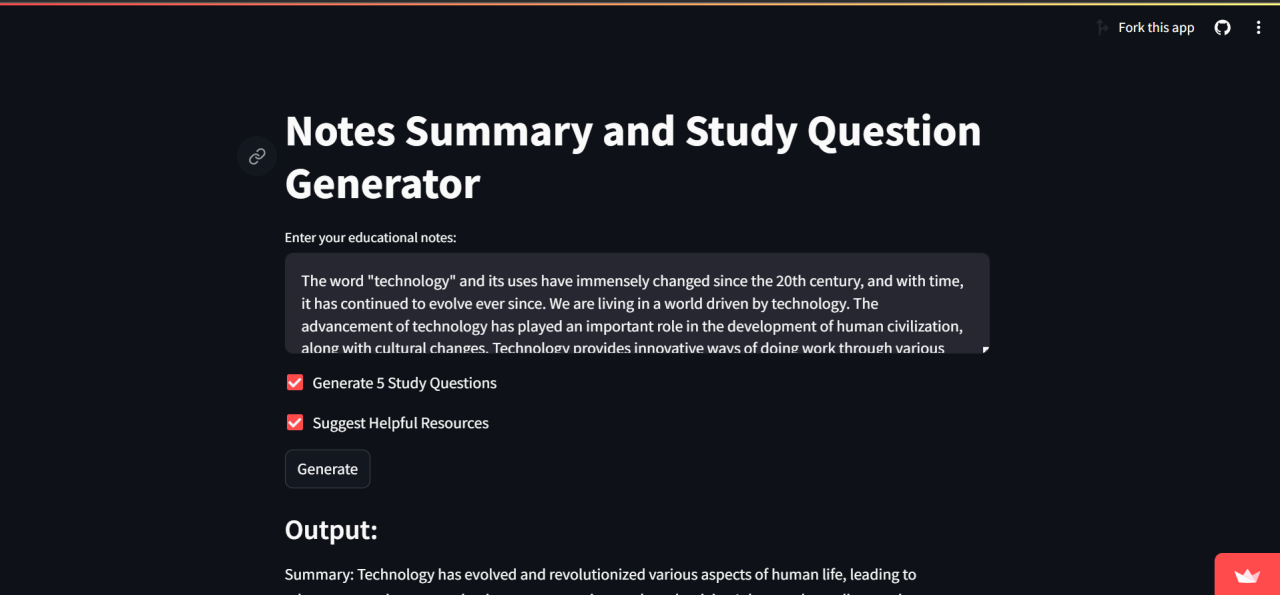
In summary, learning how to effectively utilize AI for document summarization can streamline workflows, improve comprehension, and facilitate better decision-making. By understanding the various techniques, choosing suitable tools, and applying proper formatting, users can unlock the full potential of AI-driven summaries. As this technology continues to evolve, staying informed and adaptable will ensure you maximize its benefits across diverse professional and academic contexts.